
Festive Lighting Strategy for Compact Spaces: Making the Most of Every Square Foot of a Space
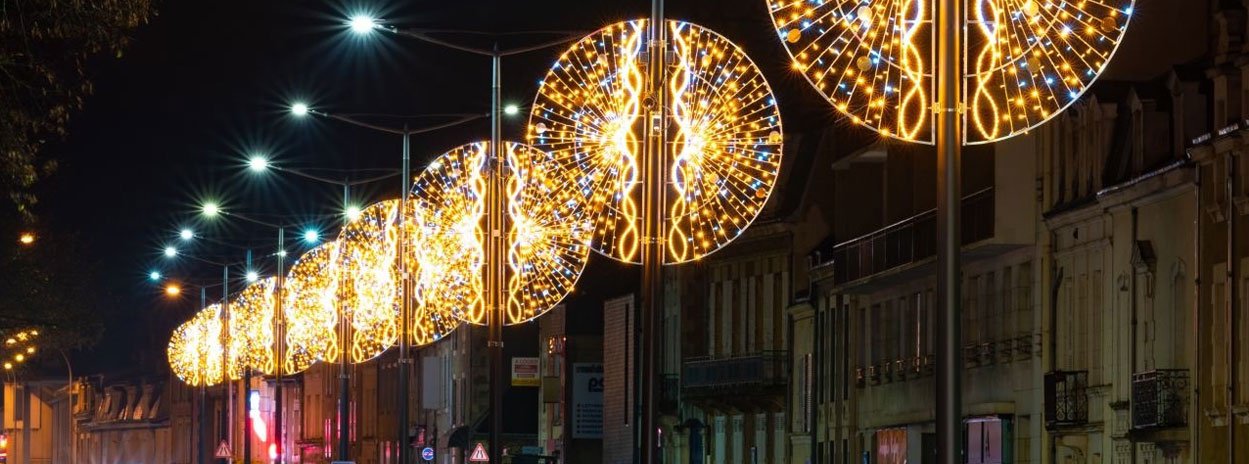
Our Amaya display – height: 2 meters


For business development corporations (BDCs) and municipalities, festive lighting is more than just a decorative element. It boosts a city’s appeal, provides direct support to local businesses, and serves as a powerful expression of collective identity. Yet many downtown areas face the same challenge:limited space. Narrow sidewalks, a lack of a central square, historic streets, heavy traffic… all these factors call for a creative approach.
The solution isn't to add more space, but to make the most of what we already have through smarter design.
Thinking in three dimensions
In compact city centers, the most effective lighting plans extend above ground level and focus on three key areas:
Airspace (above our heads)
Vertical structures (streetlights, poles, facades, entrances)
Existing natural features (trees)
Combining these elements transforms a small shopping street into a warm and immersive experience.
1. Focus on overhead lighting: maximum impact without cluttering the space
Hanging decorations, light strings, festive garlands,festoon lighting, and light canopies are ideal for narrow streets. They:
Ensure the smooth flow of pedestrian traffic
Keep sidewalks clear
Create immersive environments
Boosts daytime energy, creates a warm atmosphere, and ensures safety at night
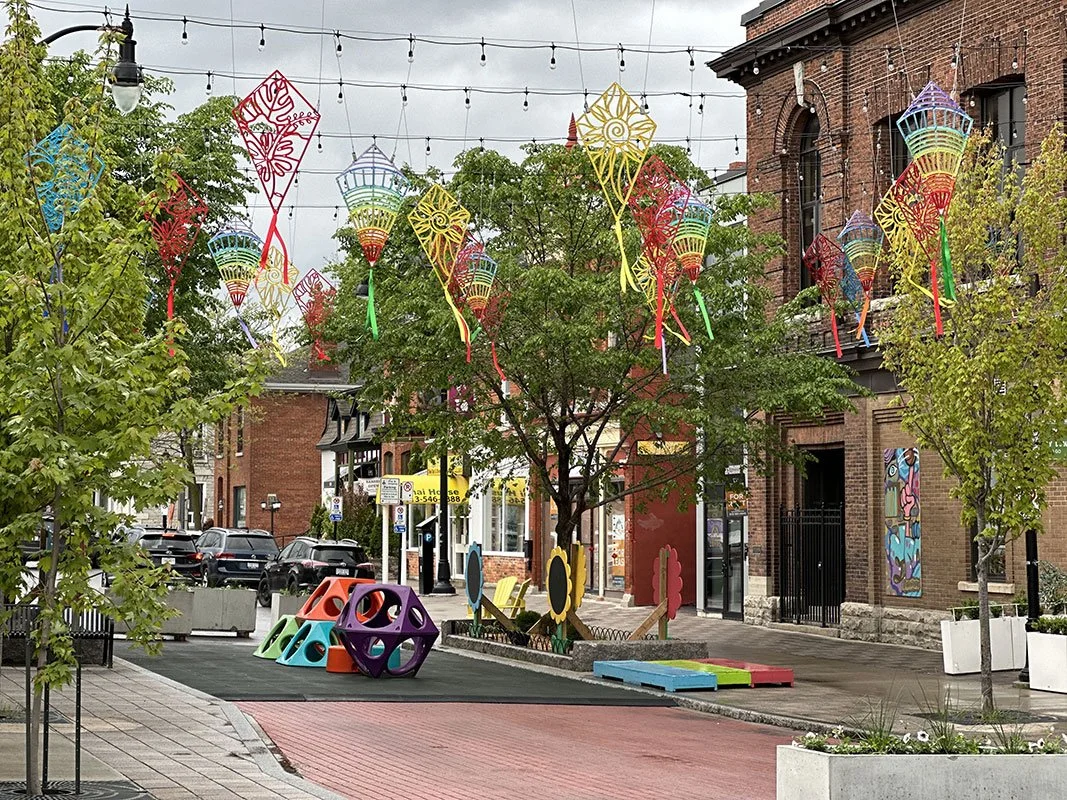
Downtown Kingston
In traditional streets where buildings face each other, overhead lighting visually frames the street and brings the entire area to life. View the case study: “Starry Sky” Lighted Ceiling to Revitalize Downtown Dolbeau-Mistassini to learn more.
2. Make use of existing infrastructure
Streetlights are among the most effective assets in a city center. Decorations mounted on streetlight poles make it possible to:
Create a sense of cohesion across several city blocks
Strengthen the seasonal identity
Developing the program over the years
Avoid interfering with pedestrian traffic
When repeated consistently, even simple elements can create a highly effective sense of purpose.
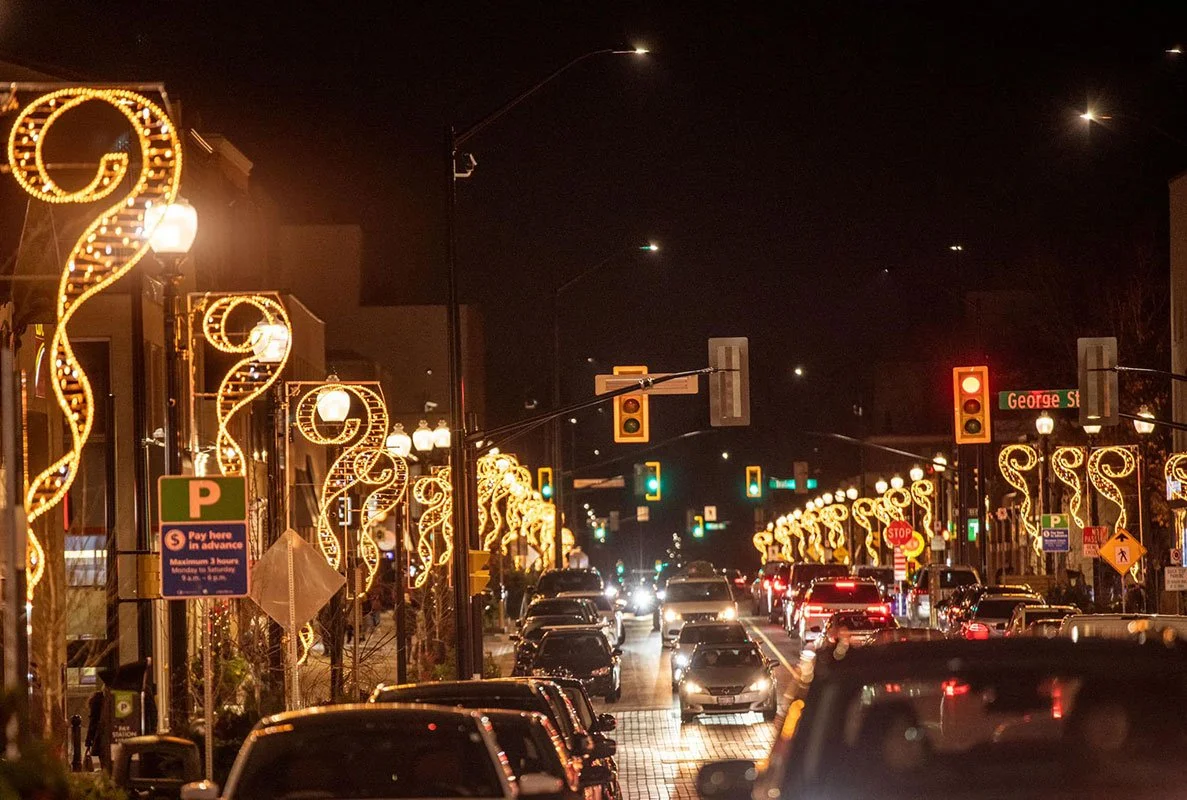
Downtown Oakville
3. Let the trees create warmth and depth
Street trees soften the urban landscape and capture light in a remarkable way. Commercial LED lighting equipment:
Withstands wind, snow, and frost
Creates a warm and inviting atmosphere in retail and dining areas
Offers an excellent return on investment year-round
Tree trunks wrapped in string lights and illuminated canopies add depth without taking up floor space. Read the article: Our tips for lighting a tree with string lights to learn more.
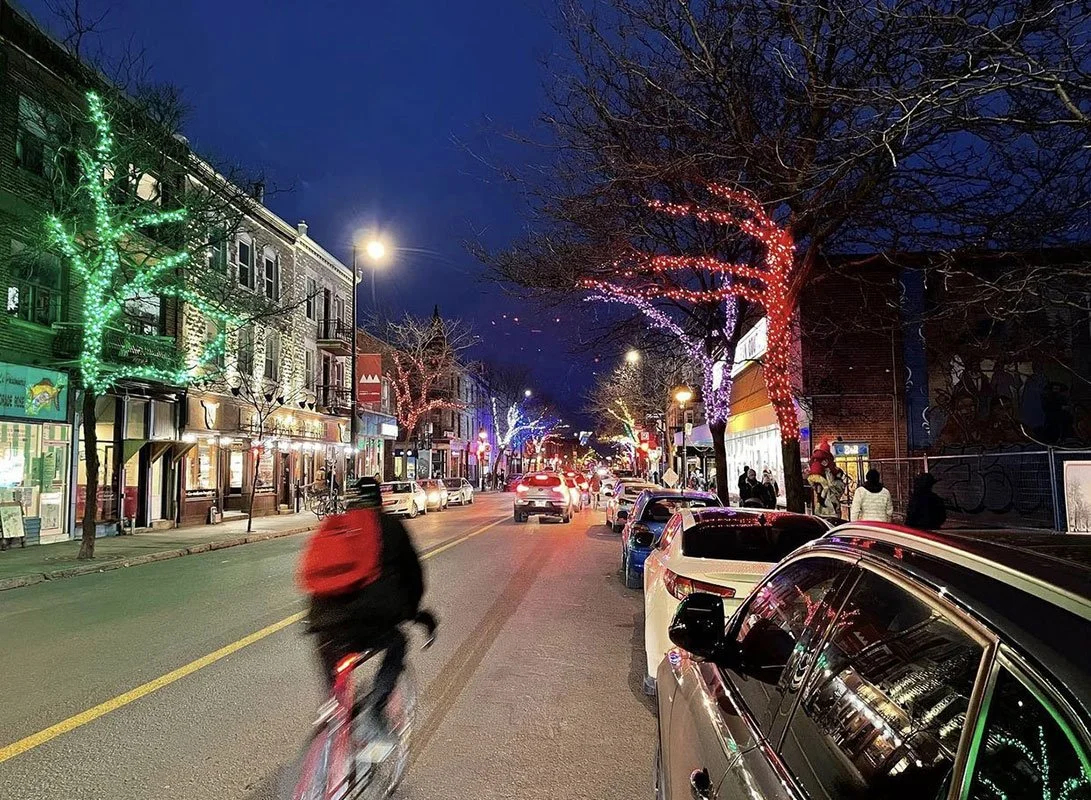
SDC Mont-Royal Avenue
4. Incorporate architectural lighting
In historic downtown areas or those with significant architectural value, building facades become illuminated canvases. Architectural lighting:
Highlights architectural details (cornices, arches, pillars, entrances)
Improves the sense of safety in the evening
Creates a bold look without adding bulk
The use of architectural lighting helps to showcasing the area in the long term, well beyond the holiday season.
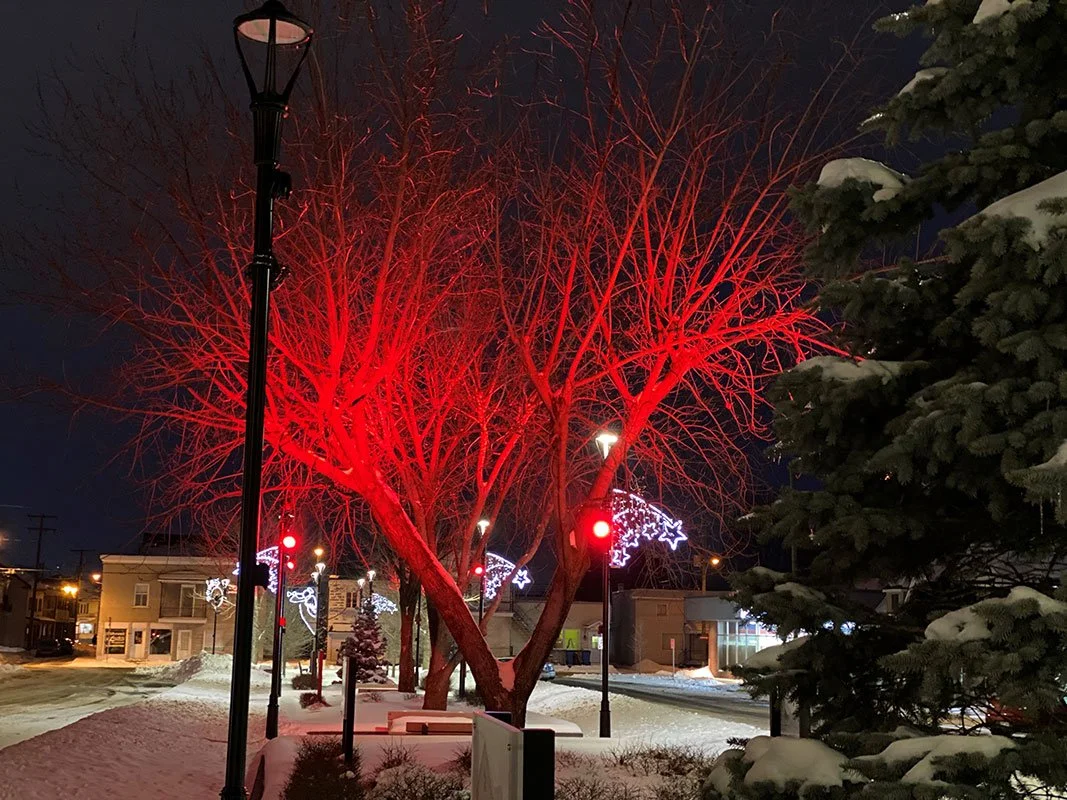
Berthierville
Essential Design Principles
The most effective festive lighting concepts share three characteristics:
Consistency creates cohesion.Repeating the same elements across multiple sections transforms a setting into a distinct identity.
Layering creates depth.Overhead lighting, streetlights, tree lighting, and architectural lighting blend seamlessly to create a unique atmosphere.
The scale of decorative elements must be consistent with the character of the area.The design must be adapted to the height of the buildings, sightlines, and pedestrian and vehicular traffic patterns.
Sustainability and growth: the keys to success
For municipalities and business development corporations, performance is essential.
Prioritize:
Commercial-grade equipment;
Durable and able to withstand our harsh climate;
Energy-efficient, low-power devices that useLED technology;
Can be reused over several seasons and years;
The most sustainable concepts are often rolled out in phases, starting with a signature element and then gradually adding complementary elements that ultimately create a cohesive and impressive concept.
Plan early for the best results
Implementing a seasonal lighting concept requires coordination and planning ahead. Starting in late spring or early summer allows you to:
Develop a cohesive design concept that showcases the target sector;
Plan a realistic and optimal budget
Becoming aware of the constraints
Plan logistics and coordinate facilities
Early planning ensures a well-organized process, minimizes unexpected issues, and guarantees optimal results that will wow your guests! Read the article: Practical Mini Guide: Easily Plan Your Lighting Project to learn more.
Small space, big impact.
A compact downtown area isn’t a limitation—it’s a real opportunity to create a rich, warm, and memorable lighting experience. Through thoughtful design and strategic use of vertical space, even the narrowest streets can be transformed into must-visit, attractive, and highly shareable destinations.
At Leblanc Illuminations, we partner with community development corporations and municipalities across Canada to create sustainable festive lighting designs that are suited to our climate and perfectly aligned with each community’s identity and goals.
What if your next project could really boost your appeal?Let’s talk about it. Contact us today to schedule a brief exploratory meeting, where we can assess your space, share concrete ideas, and propose a custom concept—with no obligation.