
Complete buying guide - Illuminations and theme decorations

Festive lighting selection: be prepared before you buy!


Planning a lighting or decoration project is a very rewarding experience. However, the exercise can sometimes seem complex at first glance. Between budgetary constraints, logistical considerations, aesthetic decisions, technical aspects, and a thousand and one creative possibilities, it is easy to feel overwhelmed. At Leblanc Illuminations, we have assisted hundreds of municipalities and organizations in the success of their projects. With this experience, we know that by asking the right questions from the start, it is possible to facilitate the analysis of possibilities, save time, deploy the right resources, and obtain the coveted WOW effect.
Here's how to prepare for the development of your project!
1. What is the objective of your project?
Festive lighting projects are carried out to meet various strategic and emotional objectives. They enhance a location, create a warm and welcoming atmosphere, while reinforcing the visual identity of a neighborhood, city, or establishment. These installations also help to revitalize public spaces, attract visitors, and stimulate business for local shops, especially during key periods such as the end-of-year holidays or tourist seasons. For many municipalities and organizations, illuminations also represent a way to highlight a special event, bring the community together, and convey values such as solidarity, creativity, or sustainable development. Finally, they leave a lasting impression and help create a memorable experience for citizens, customers, or visitors.
With this in mind, the first step is to clearly define the context of the project. Is it initiated as part of a budgetary plan or in anticipation of a call for tenders? Clearly defining the intention behind the approach allows aligning internal and external resources from the start. It is also important to specify the type of concept desired: is it a festive lighting and decoration project, dynamic architectural lighting, or a hybrid approach combining the two? Budget evaluation also plays a key role. Even if creativity is limitless, having a realistic budget range guides technical and artistic choices. This envelope must also consider the services envisioned, especially if it is a turnkey solution including installation, dismantling, inspection, and storage. These services can represent a significant portion of the budget and influence decisions regarding the types of decorations selected.

Above, a superb ice-skating trail in Saint-Jean-sur-Richelieu, the result of a now-completed project, combining architectural lighting (left photo) and lighting equipment (center and right photos).
📸 Photo credit: Viviane Hervieux.
2. What theme would you like to explore?
The project can be part of a particular season, such as winter or spring, or be linked to a specific event such as a festival, anniversary, or awareness campaign. Among the most common themes are Christmas, Valentine's Day, Easter, Halloween, national holidays, or social causes such as Pink October, dedicated to breast cancer prevention. It is also possible to opt for a fully customized concept, whether it is a signature or carries the identity of a place. At this stage, it is essential to take into account certain preferences or constraints such as desired colors (or colors completely rejected), types of animation, or other specific requirements. This will help define the tone of the project: are you looking for a sober and elegant atmosphere, a static or animated staging, or an immersive, unique, and engaging experience for the public?
3. What locations are targeted?
Projects can be considered for a wide variety of locations, whether indoor or outdoor. This includes commercial or municipal buildings, natural spaces such as parks, trees, or trails, as well as public places such as streets, boulevards, or city entrances. Specific events, such as Christmas markets or festivals, can also be highlighted by light or scenographic installations. Finally, dynamic projections and animations offer additional possibilities to create immersive experiences for a season, an event, or permanently. Determining the locations from the start is essential, as it allows to better guide the design, anticipate technical constraints, define logistical needs, and maximize the visual and emotional impact of the project.

The Tadd tree displays its splendor, both outdoors and indoors.
Left: at the Sheraton Hotel in Saint-Hyacinthe.
Right: on Place Vauquelin in Montreal.
📸 Photo credit: Viviane Hervieux.
4. What types of decorations are you looking for?
There is a wide variety of decorations, each offering a particular atmosphere depending on the location and the objective. Among the most common options are pole mounted decorations attached to lampposts, street crossings or overhead light suspensions, 2D or 3D freestanding structures, as well as interactive or photo booth-type decorations designed to capture and share memorable moments. It is also possible to design signature or entirely custom decorations, true artistic and distinctive luminous works. Some clients prefer decorations offering a more pronounced daytime aesthetic, while others opt for eco-responsible solutions, made from recycled or bio-sourced materials, with or without luminous elements. Still others choose installations in trees, on ceilings, or on building facades. Determining the type of decorations from the beginning of the project is essential to guide the overall design, anticipate technical constraints, optimize the budget, and ensure consistency between the creative intention and your expectations.
5. What are the technical constraints?
Before choosing the decorations or determining their location, it is essential to identify the technical constraints related to the sites. For installations on lampposts or buildings, the availability of technical plans or diagrams with the exact dimensions is a valuable asset. If this information is not available, these details will need to be validated later. It is also important to verify the ownership of the structures or installations: do you own the lampposts or poles, or do they depend on a third party? Is it possible to consider anchors or fixings for the installation of decorations or lighting equipment on the building(s)? For squares or public spaces, it is important to assess the configuration of the ground: is it level or sloping, grassy, asphalted, paved, or concrete? Can guy wires be installed, is there a weight limitation on the site? Are there specific heights or clearances to be respected? Other elements must also be taken into account, such as the presence of an irrigation system, high-voltage cables nearby, the needs related to snow removal with machinery (are there risks of breakage related to snow removal?), or the proximity of an electrical supply and the capacity of the available outlets (e.g., 120V or 240V, 15A or 20A). In addition, some municipalities impose specific regulations: lighting time slots, permits for occupying public land during installation, access restrictions, or intervention methods. Finally, it is crucial to consider the risks associated with vandalism or extreme weather conditions, in order to select resistant materials and adapt installation methods accordingly. Identifying these parameters from the start ensures the feasibility, safety, and durability of the project. For some projects, it may be useful to plan a site visit or provide photos of the targeted sites and their environments.

"Yes... this lamppost will be perfect for hosting a one-meter-high decoration. However, the 2-meter decorations will have to be installed elsewhere in the city."
6. Do you have a team to manage the installation and storage of your decorations and lighting equipment?
The logistical planning of a lighting project is not limited to the choice of decorations: it also involves thinking about installation, storage, and maintenance. Depending on your internal resources, you can mobilize your own team — which saves on service costs — or hire a local subcontractor with the necessary equipment and expertise, such as a sign, horticulture, electricity, or construction company. In some cases, Leblanc Illuminations can recommend trusted partners in targeted provinces or regions. Based in Joliette, our team also offers a turnkey service in several sectors of Quebec.
The storage of decorations is also a crucial factor to consider. Ideally, they should be stored indoors, in a dry and temperate space, to extend their lifespan. Decorations exposed to the elements and extreme temperature variations are likely to deteriorate more quickly. If space is limited, we can offer you optimized, compact decorations that offer an impressive visual impact while facilitating storage.
Over time, the maintenance of decorations becomes essential and requires some planning to ensure their proper functioning season after season. Do you have resources to carry out these interventions? If not, Leblanc Illuminations offers a maintenance and refurbishment program that ensures peace of mind. This includes:
A free inspection of your decorations in the workshop, or remote technical assistance for customers located outside Quebec;
A preferential rate for maintenance carried out in our workshops (25% discount on the hourly labor rate);
Free assistance from our technicians to guide your teams remotely, if needed;
A 25% discount on replacement parts and materials;
A collection and return service for decorations at a reduced rate, offered in certain regions of Quebec.

The maintenance and storage of your light decorations are two crucial factors to take into consideration.
This program is offered exclusively during the low season, from January to the end of May, the ideal time to plan maintenance before the next installation.
Why address these aspects now? Because during the high season (August to December), the installation and production schedule is very busy. A last-minute request for maintenance or repairs may not be processed within the desired timeframe. By anticipating now, you ensure a smooth and stress-free execution.
7. What is the useful lifespan of decorations and lighting equipment?
At Leblanc Illuminations Canada, product durability is a priority. We offer a two (2) year manufacturer's warranty on LED lighting products that comply with current Canadian standards, as well as a five (5) year warranty on the aluminum structures used in our ready-to-install decorations. Projectors also benefit from a five (5) year warranty. Please note that these warranties do not include transportation costs or service calls, and do not cover damage caused by extreme weather conditions (Acts of God), theft, vandalism, or any unauthorized modification of the decorations. Once the warranty period has expired, repair kits are available upon request to extend the life of your installations. Thanks to our permanent team based in Joliette, active year-round in production and maintenance, we maintain a large inventory of spare parts and replacement products, which ensures fast and efficient service when needed.
8. How long does it take to receive a proposal or quote?
Some projects require approval from a city council, an advisory committee, or a department head. It is therefore essential to allow a reasonable amount of time for the preparation and receipt of a complete proposal. Depending on the time of year, it generally takes between 1 and 3 weeks to develop a customized concept featuring decorations from our current collections and catalogs. For projects requiring custom-made decorations, please allow 2 to 5 weeks to design a proposal that accurately reflects your vision, needs, and expectations. If you simply need a price quote for specific materials or decorations, we can provide you with a quote quickly. To optimize your project planning, we recommend starting the process early in the year. This will allow you to benefit from a wide selection of decorations and products and ensure your order is delivered according to your desired schedule.
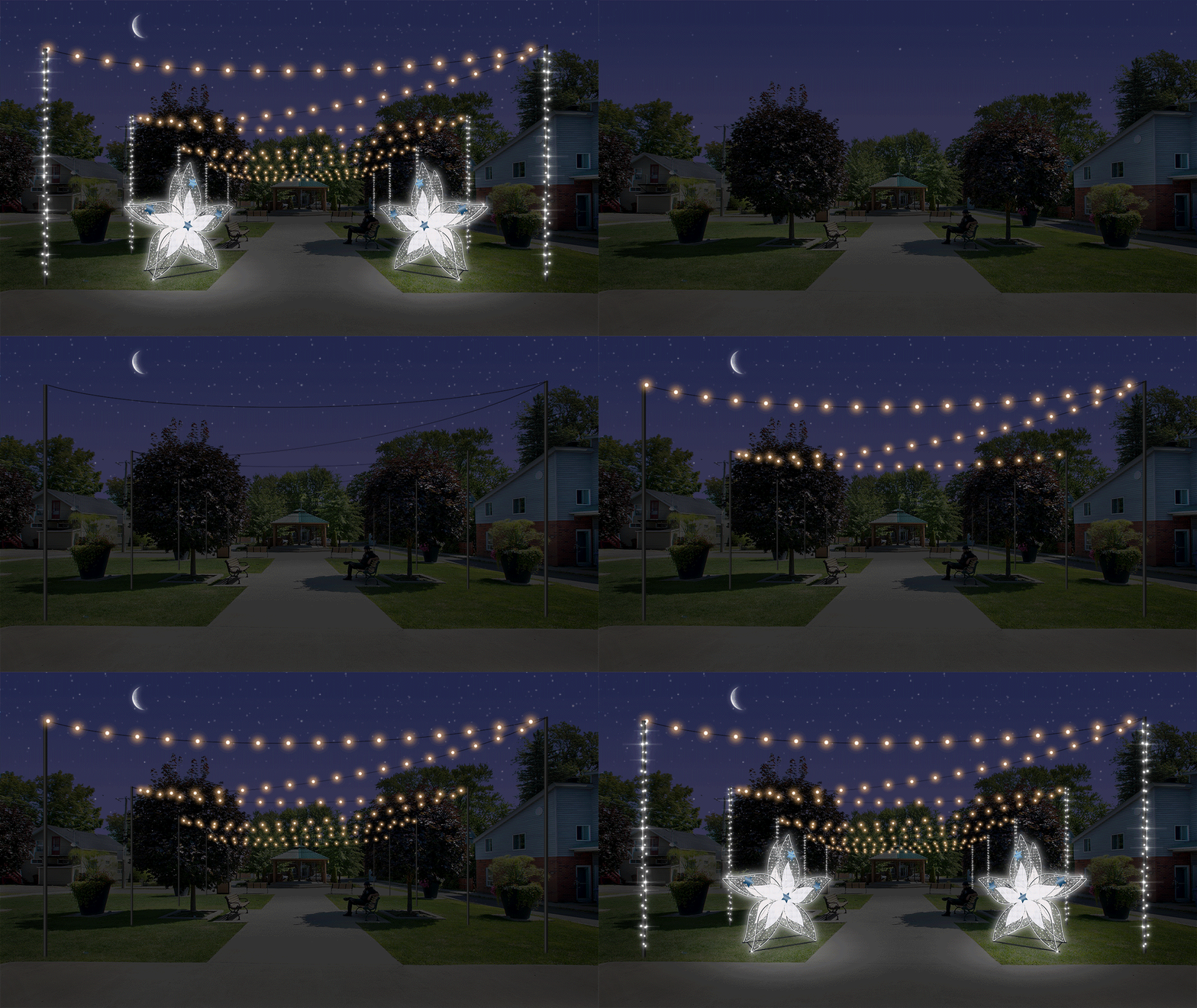
Leblanc Illuminations-Canada offers its customers a simulation development service completely free of charge. The simulations allow a festive decoration and lighting project to be translated into a concrete and realistic visual.
9. I have a last-minute project, is it too late to acquire decorations for the Holiday season?
Rest assured, it's never too late! Even if the selection of decorations or equipment may be more limited as the Holidays approach, we know that last-minute projects can arise, sometimes unexpectedly. That's why we maintain a large inventory, specifically to respond to this type of request. In these situations, our teams demonstrate responsiveness and creativity to offer you original, effective, and sometimes surprising solutions, to bring your project to life despite tight deadlines.
Conclusion
This guide has been designed to provide you with the elements necessary for a structured and effective planning of your lighting or themed decoration project. By clearly defining your needs, constraints, and objectives from the outset, you will gain efficiency, avoid unnecessary expenses, and reduce last-minute adjustments. We recommend centralizing these reflections with your team or decision-making committee to optimize your budget planning, calls for tenders, or price requests. At Leblanc Illuminations, we support you at every stage — from design to installation — while ensuring reliable after-sales service for the seasonal maintenance of your decorations. For any questions or additional information, do not hesitate to discuss it with your representative during your next meeting.