
Published on August 6, 2026 | Last updated on October 8, 2026

Well-planned logistics and careful coordination are essential to ensuring that every project runs smoothly, from design to delivery.


When a customer places an order, they’re not just evaluating the quality of the final product. They’re also assessing how quickly their order is processed, the reliability of delivery times, the clarity of communications, and the company’s ability to deliver exactly what was promised. In other words, the customer experience begins long before delivery. Watch this video to see how our team prepares each order.
At Leblanc Illuminations, we know that a well-executed project relies on much more than a good product. In a context where projects may include design, procurement, shipping, installation, dismantling, inspection, repair, and sometimes even storage, logistics management becomes a central performance driver. That is why we rely on structured planning, realistic timelines, and rigorous coordination to ensure the success of each project. Planning your next project? Check out our mini-guide for practical tips.
In this article, discover how good logistics management improves order processing, which challenges anticipate and how this organization contributes to your customers' satisfaction.
Order Processing: Much More Than Simple Shipping
Order processing is not just about preparing a package and shipping it. It includes every step, from receiving the order to final delivery, while considering the client’s needs and cost optimization.
This includes receiving the order, analyzing available items, identifying products that need to be assembled or ordered from suppliers, planning production according to the desired date, packaging, choosing the carrier based on expected timelines and transportation costs, and finally, shipping.
But the process does not stop shipping. Once the merchandise is received, the client also plays an important role in the smooth execution of the project. They must validate the quantities, check the condition of the materials, and make sure that everything works properly. If an item is missing or defective, a quick response makes it possible to make the necessary corrections and avoid compromising the installation.
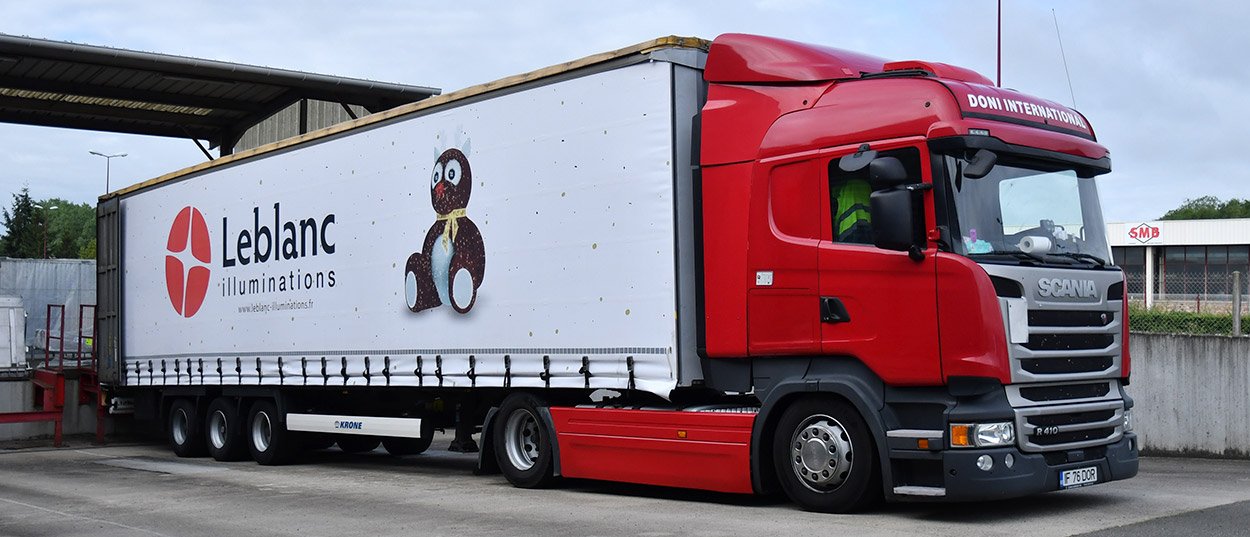
From our warehouse to your project, every Leblanc Illuminations order is planned, prepared and delivered with the utmost care.
Gooding Planning: Deadlines Met, Fewer Errors
Meeting a delivery deadline never happens by chance. It is the result of a well-planned logistics chain. At Leblanc Illuminations-Canada, we recommend starting the process early in the year, as some projects require lead times ranging from a few weeks to three months, depending on their complexity and the availability of materials.
Rigorous planning makes it possible to secure supplies, organize assembly, reduce last-minute adjustments, and ensure on-time delivery and installation. To help our clients structure their projects, we have also prepared a Buying Guide for Your Lighting Projects.
In short, the earlier a project is planned, the easier it is to secure supplies, organize assembly, avoid errors, and ensure on-time delivery and installation.
A solid logistics process therefore acts as a true prevention system and allows us to deliver services that live up to our clients' expectations.
Our Our Most Common Logistics Challenges… and How to Anticipate Them
One of the main logistics challenges concerns the processing of new orders during the peak period of October and November. At this time of year, order volume increases, deadlines become tighter, and available resources are heavily in demand, which inevitably makes planning more complex.
In this context, three issues come up regularly and should be anticipated.
If you receive your order several weeks before it will be used or installed, take the time to check its accuracy and the working condition of the decorations as soon as you receive it. If there is a quantity error or if certain elements were damaged during transport, we will be able to intervene much more quickly before the peak period.
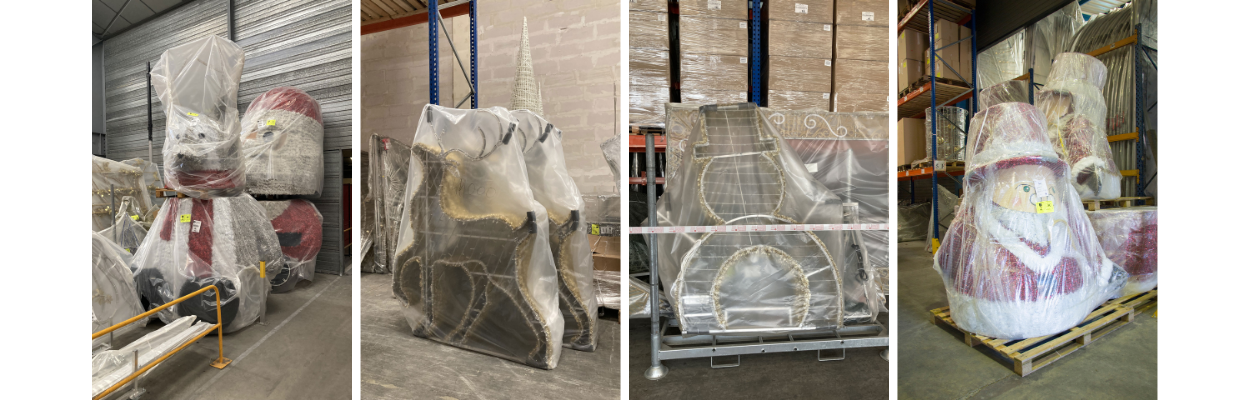
A quick check at the right time can prevent many issues. Inspect your decorations as soon as they arrive.
Large-scale projects that are planned late represent a real logistics challenge. As the high season approaches, the design, production, and receiving-shipping teams are already operating at a sustained pace. To maximize the chances of success, these projects should ideally be started before July.
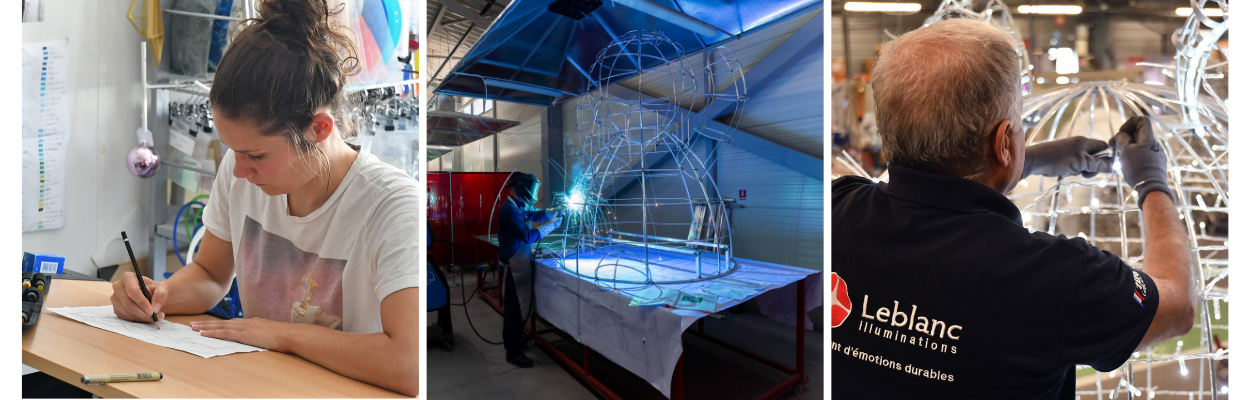
Design, assembly, and quality control: key steps in preparing large-scale projects properly.
At Leblanc Illuminations, we maintain a large inventory of illuminated decorations and replacement parts, which allows us to respond quickly to most requests. However, certain highly specialized or older equipment may require a special order and a longer lead time. To avoid unexpected issues, we strongly recommend inspecting and repairing decorations during the spring removal process rather than waiting until the fall installation. To learn more, read our article on Maintaining Lighting Decorations in Canada.
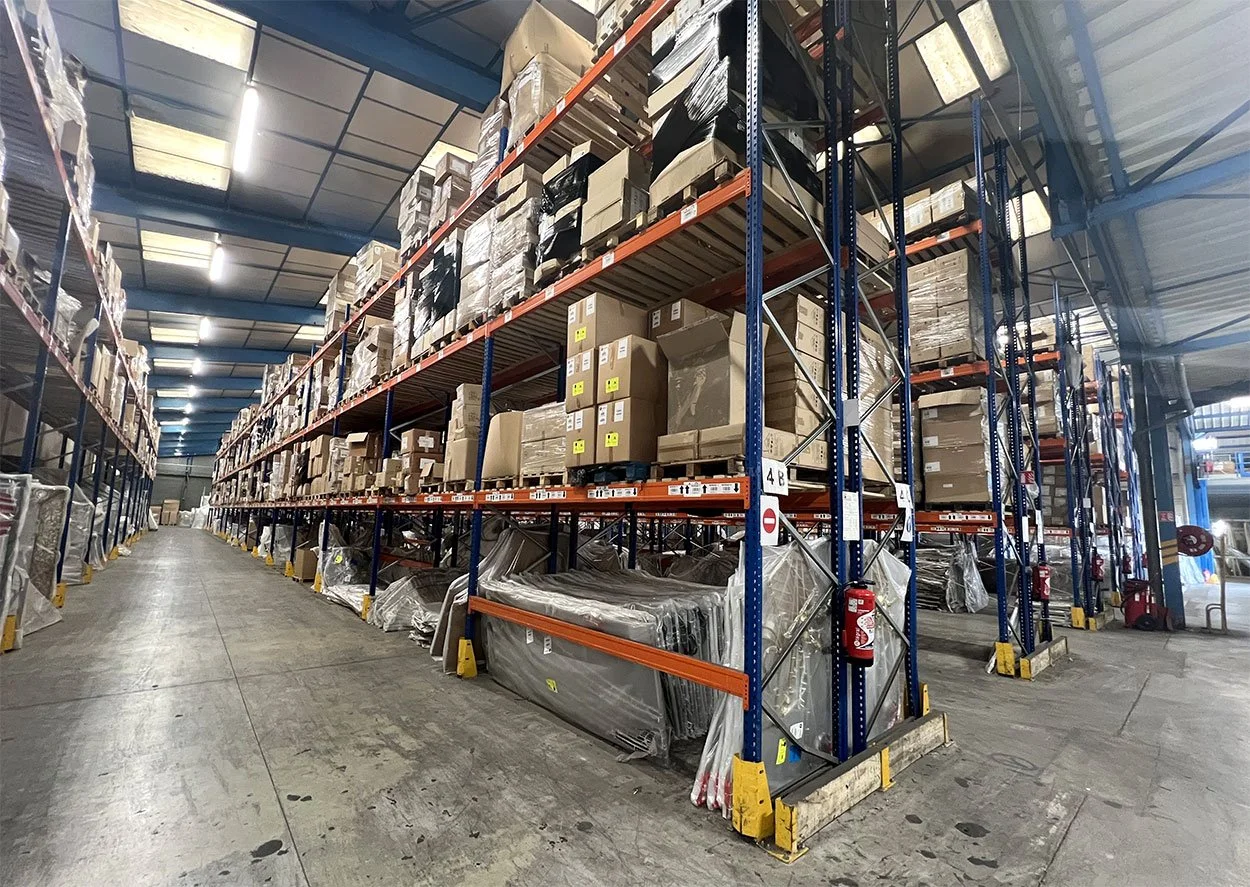
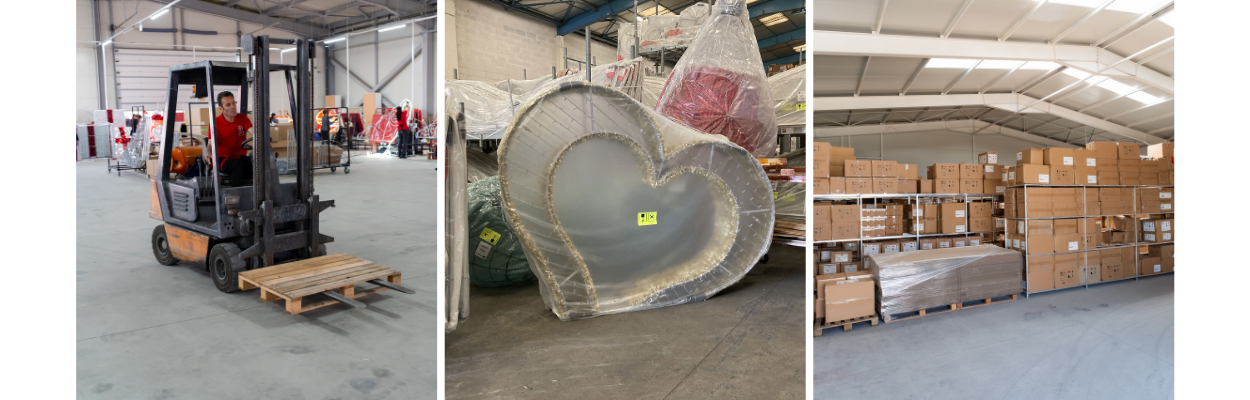
Decorations, replacement parts, and specialized equipment — our warehouse is designed to respond quickly to your requests.
In summary, when the sales, logistics, production, and supplier teams share the same information, it becomes much easier to respond effectively to unforeseen issues. This coordinated approach allows us to carry out large-scale turnkey projects, where logistics, installation, inspection, and technical coordination function as one coherent whole.
Our Parc Safari project case study shows how good coordination makes it possible to deliver a large-scale project, despite its share of complexities.
Nothing is left to chance — our team orchestrates every detail for turnkey projects.
Communication: The Common Thread of the Entire Logistics Chain
Effective logistics rely on just as many tools as they do on clear and fluid communication. To meet a client’s expectations, those expectations must first be well defined and well understood by everyone involved in the logistics chain. It is therefore essential to specify, from the very beginning, the project objectives, budget, expected deliverables, desired effect, and delivery, installation, and dismantling dates.
At Leblanc Illuminations-Canada, we support our clients from the earliest reflections surrounding a future illumination project. We prepare visual simulations, precise quotes, and structured support at every stage, even after delivery, whether we are responsible for the installation. Discover how our visual simulations turn an idea into a concrete concept tailored to your environment.
Conclusion
In short, good logistics management is far more than operational support: it is a decisive factor in efficient order processing and customer satisfaction.
When it is neglected, the consequences are felt quickly: delays, confusion, errors, dissatisfaction and loss of trust. When it is well structured, on the other hand, it makes it possible to plan each step better, manage peak periods, meet deadlines and offer a smooth experience from the start of the project to the end.
For organizations managing large-scale seasonal, event or decorative projects, this structure can make all the difference between a stressful project and a well-controlled execution.
At Leblanc Illuminations, this approach is reflected in our project planning, inventory availability, on-site coordination and the support we offer our clients at every step.
Planning a lighting project and wanting to avoid logistical surprises? Contact our team to discuss your needs and find a solution suited to your reality.